Reframing The Say Do Gap
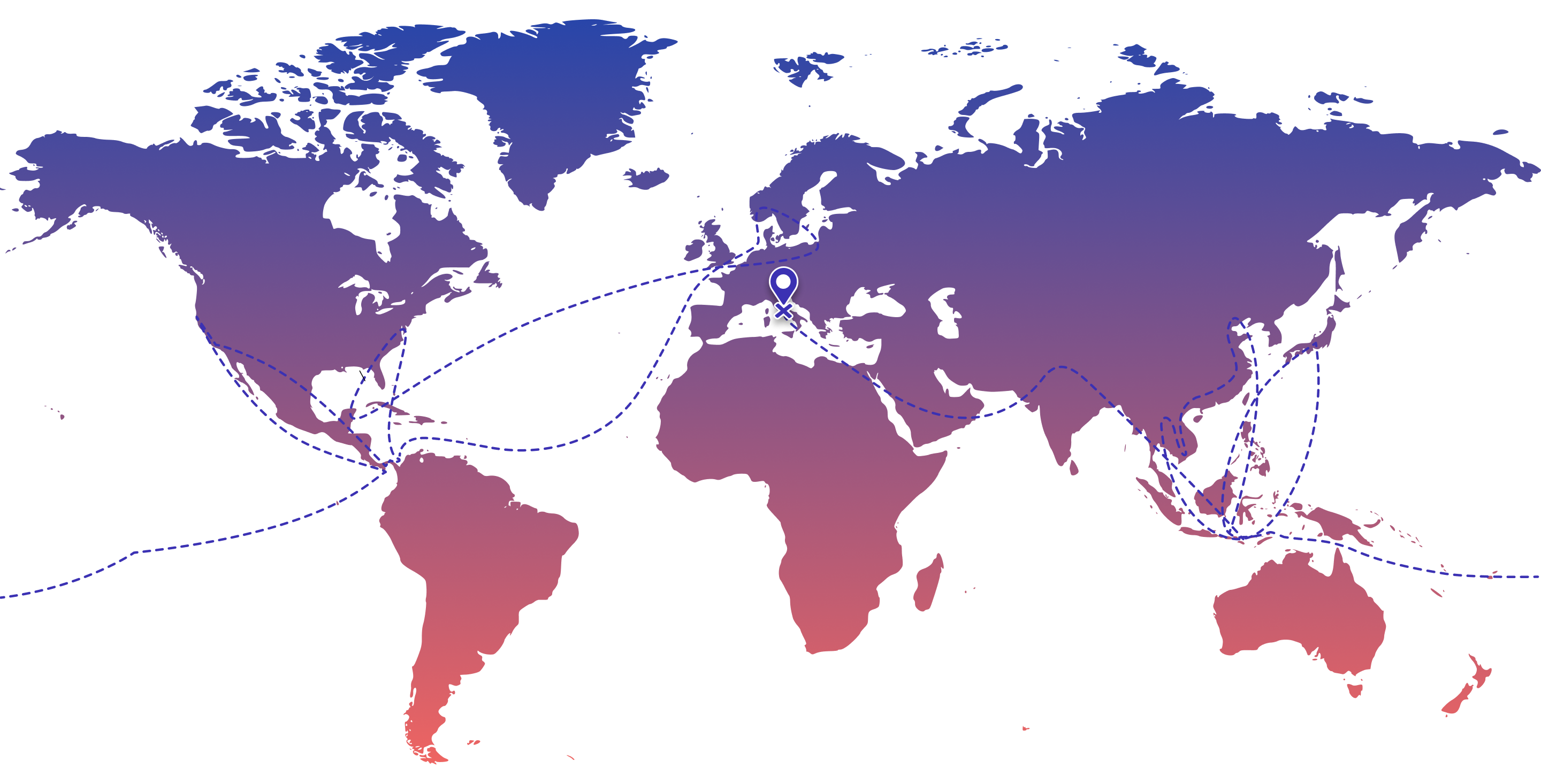
There are direct flights from Delhi to Rome, so here we are
As we’ve travelled from Argentina to India, across large countries and remote islands, one pattern has shown up consistently: the so-called “say-do gap”, where people say one thing and do another.
It cuts across cultures, backgrounds and contexts. In our industry, this is framed as a problem. A failure of honesty or follow-through, something to fix with better messaging or more persuasion.
That framing is misleading. This is not a flaw in human behaviour, but a feature. If we want to help people act in line with their intentions, we need to understand what is happening when decisions are made.
Let’s jump into it
During our sailing and travelling, we’ve meet a wide range of people. Most have good intentions, or so I believe, and everyone has a version of themselves they aspire to be.

Drivers meant well, but we were often overcharged.
Understanding these aspirations, most organisations overinvest in “Identity”. They focus on shaping what people say they want through brand building, positioning and storytelling.
But human intentions do not reliably translate into action. Real life intervenes, and context reshapes priorities.
In consumer products, this dynamic is constant. People say they want more sustainable options, healthier ingredients and better choices. But then the moment of decision arrives and behaviour shifts.
This is not because the intention disappeared, but because something else took priority at that moment. This is where frustration builds and brand teams often feel misled.
The more useful question is not why people act differently from what they say, but what affects the decision in the moment.
A helpful resource
The Decision Forces Framework is a way to understand how decisions resolve in real environments. It reframes the say-do gap as the outcome of competing forces at the moment of choice.
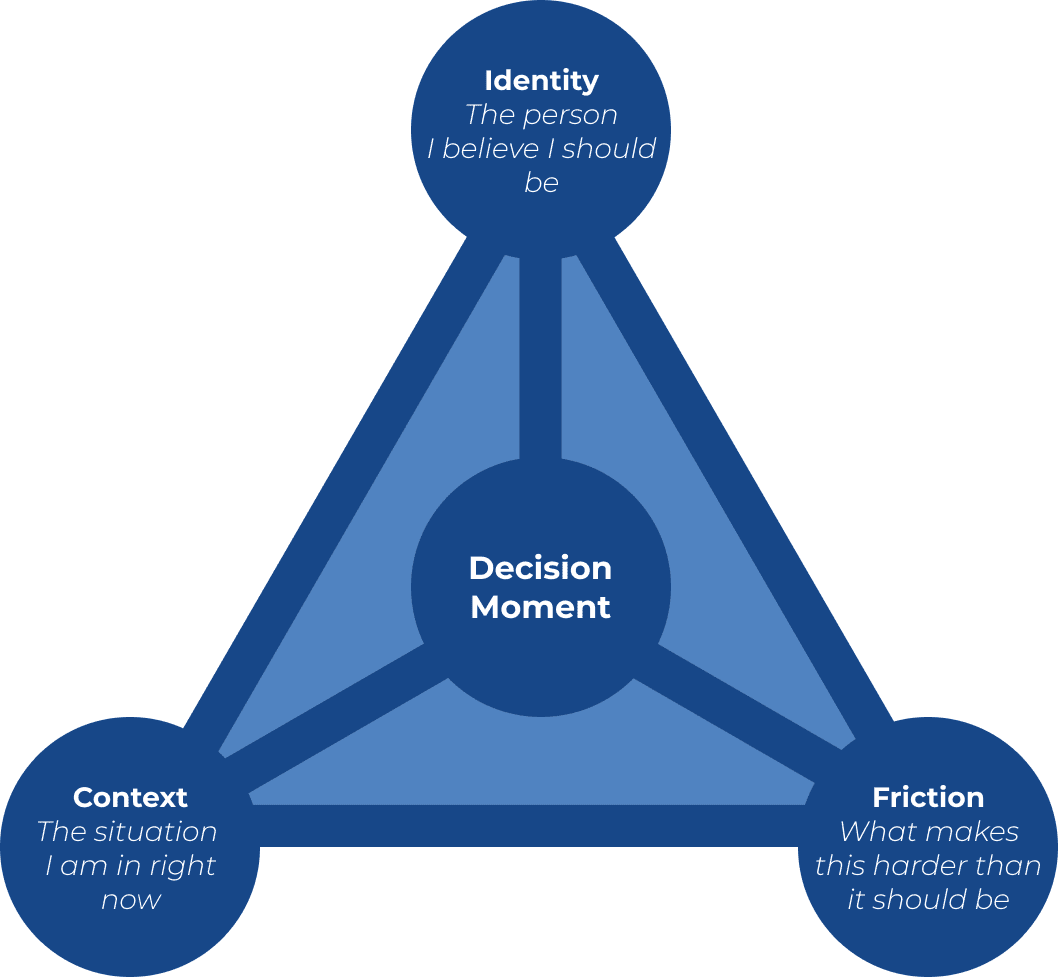
Decision Forces Framework
Most efforts focus on shaping intent, but that is not where decisions are made. Decisions happen in context. They are shaped by time pressure, comparison systems, habits and constraints.
When behaviour does not match intent, however, teams question the consumer, research or proposition. In practice, belief is rarely the issue. The issue is which force was strongest in that moment.
Five questions to get started:
- What do people say they want to do?
- What do they actually choose?
- What is getting in the way?
- How do we make the right choice the easy one?
- What is one thing we could improve knowing this?
The organisations that apply this well stop asking why consumers fail to follow through, or why there is a say-do gap. They focus instead on reshaping the conditions where decisions are made.
When friction is reduced and context is designed with intent, Identity has a chance to show up in behaviour.
Our decisions are shaped by forces, not intent or identity alone
And there’s more
✏️ Join: Design week season is kicking off and it’s worth seeing if you’re in town for any of them.
📚 Read: Patterns of India is a charming book around the patterns in the culture and everyday life of Rajasthan.
🎧 Listen: The tactical playbook for getting 20-40% more comp is an informative listen for anyone who doesn’t like negotiating.
📍 Visit: Udaipur, India seems to be the favourite place of many locals and visitors alike.