Brand Branches
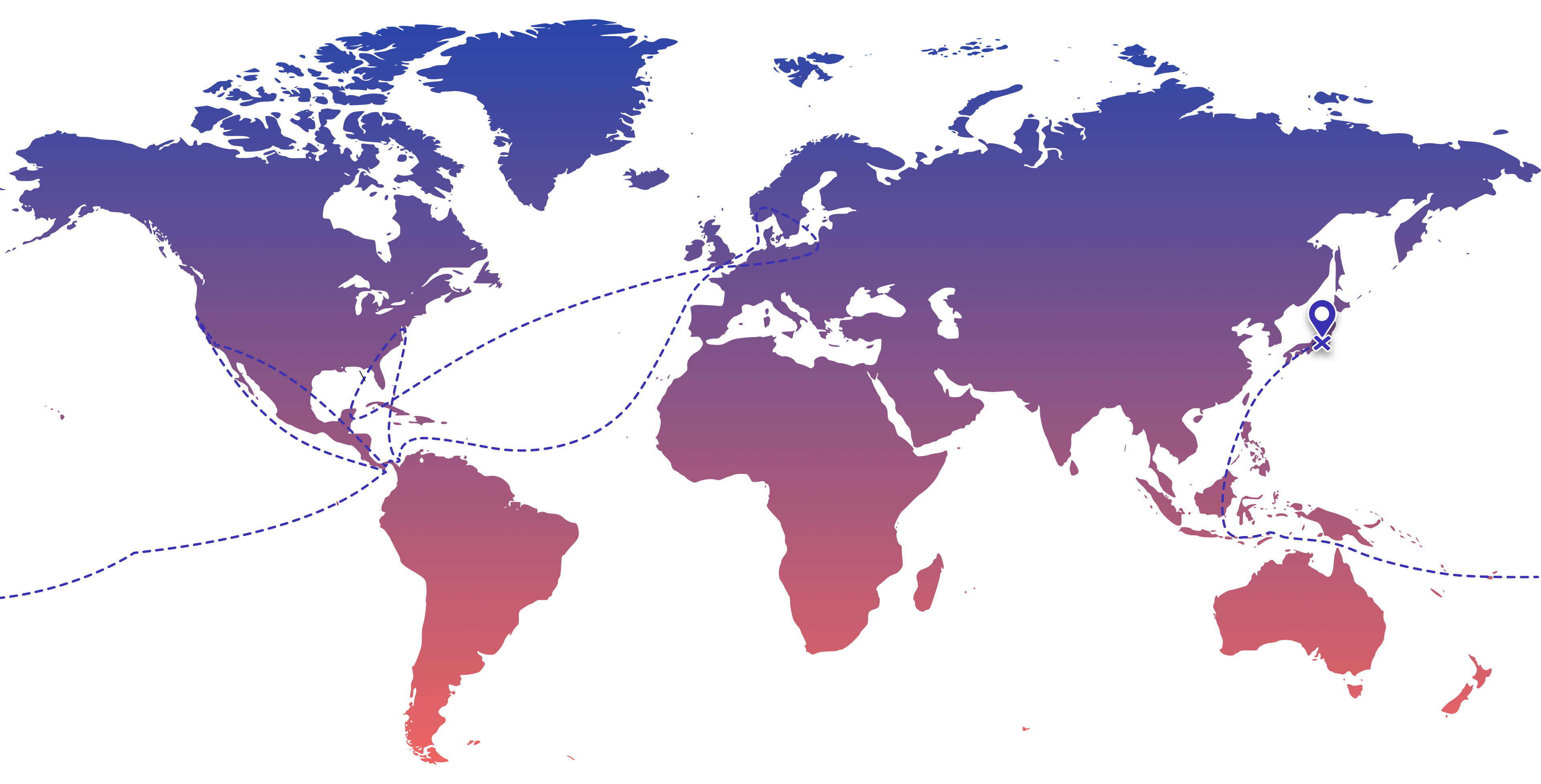
Land travel as we wait for weather to cross the Indian Ocean
As we travel through Asia, from Indonesia to Japan, Thailand to Laos, one thing became clear: belief systems don’t develop as fixed, uniform entities.
Buddhism, as an example, is recognisable across countries, yet looks and feels different depending on where you are. The core philosophy remains intact, while rituals, aesthetics and practices branch out.
That observation stayed with me as I’ve seen global brands struggle with localisation and how to conceptualise those differences.
Let’s jump into it
Strong global brands don’t behave like fixed identities. They behave more like belief systems. They remain coherent as their different branches develop according to new localities.
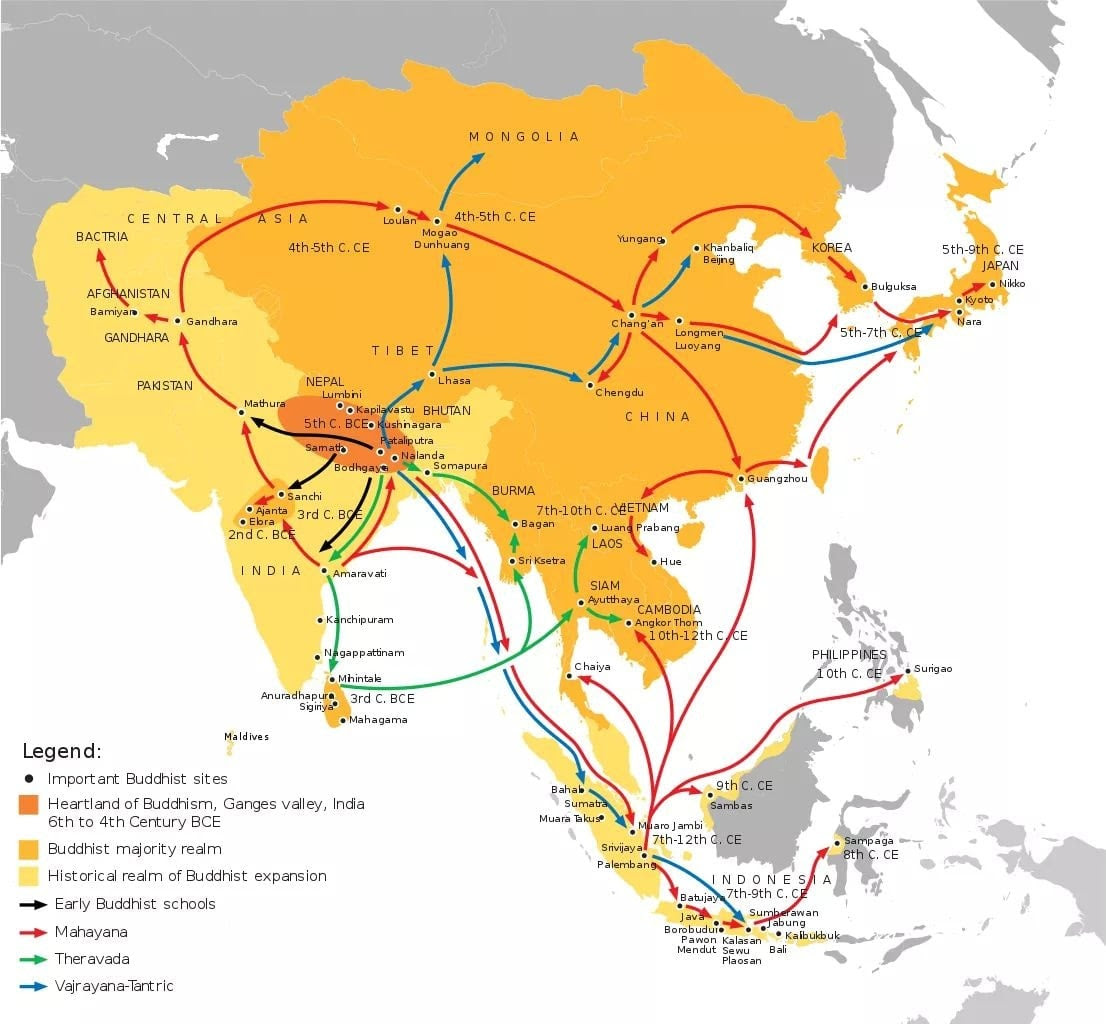
As Buddhism travelled, different branches emerged. Image Source
Often brand growth is treated as a consistency problem. As brands expand across markets, teams worry about dilution, fragmentation or losing control.
Working in both regional and global teams, I’ve seen how this tension plays out. Global teams think regions are going too far and regional teams think global teams don’t understand their market.
The usual response is to tighten rules, lock down assets and push for uniform execution. But this approach misunderstands how brands actually work at scale and this is where many get stuck.
What’s missing is a clear structure that explains where consistency lives and where variation is not only allowed, but necessary. This is where we can take inspiration from branching systems.
A helpful resource
The Brand Branches framework looks at global brands like a belief system. It separates brand decisions into three distinct layers: Global, Regional and Local, where each layer has a different purpose.
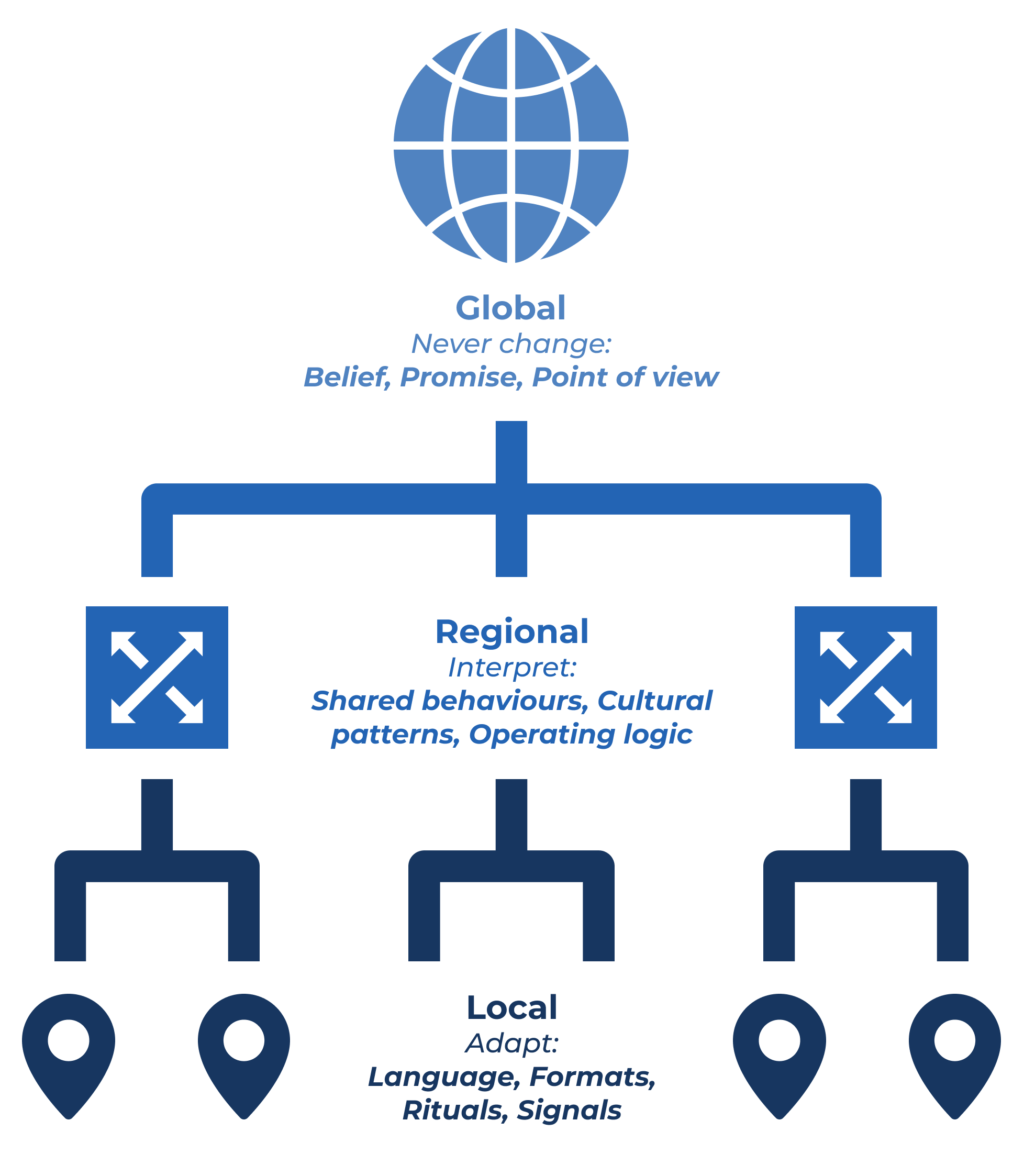
Brand Branches
The brand defines its non-negotiable aspects at the global level. The regional layer interprets that into shared behavioural patterns, while the local layer adapts expression to its place.
Use these five questions to get started with Brand Branches:
- What in our brand must never change, anywhere?
- Where are we skipping the regional layer entirely?
- What behaviours are shared across multiple markets?
- Where has local adaptation already worked well?
- When something feels “off-brand,” which layer is actually unclear?
Brand Branches offers a more useful way to think about growth. Instead of asking how tightly a brand can be controlled, it shifts the question to how belief, interpretation and expression are defined.
When those layers are in place, brands don’t have to choose between consistency and relevance. They expand, adapt and stay recognisable at the same time, because variation is part of the design.
Strong global brands scale by branching with intent
And there’s more
✏️ Join: The Marketing Tech Revolution: Navigating AI, New Tools and Talent can be joined virtually on 21 January.
📚 Read: Tiny Experiments by Anne-Laure Le Cunff is a good New Year read that encourages experiments over fixed goals.
🎧 Listen: Country of the Year discusses and identifies which country improved the most in 2025.
📍 Visit: Doi Inthanon is a beautiful national park near Chiang Mai, Thailand with some nice hiking and cultural areas.