Seaworthiness Before Sophistication
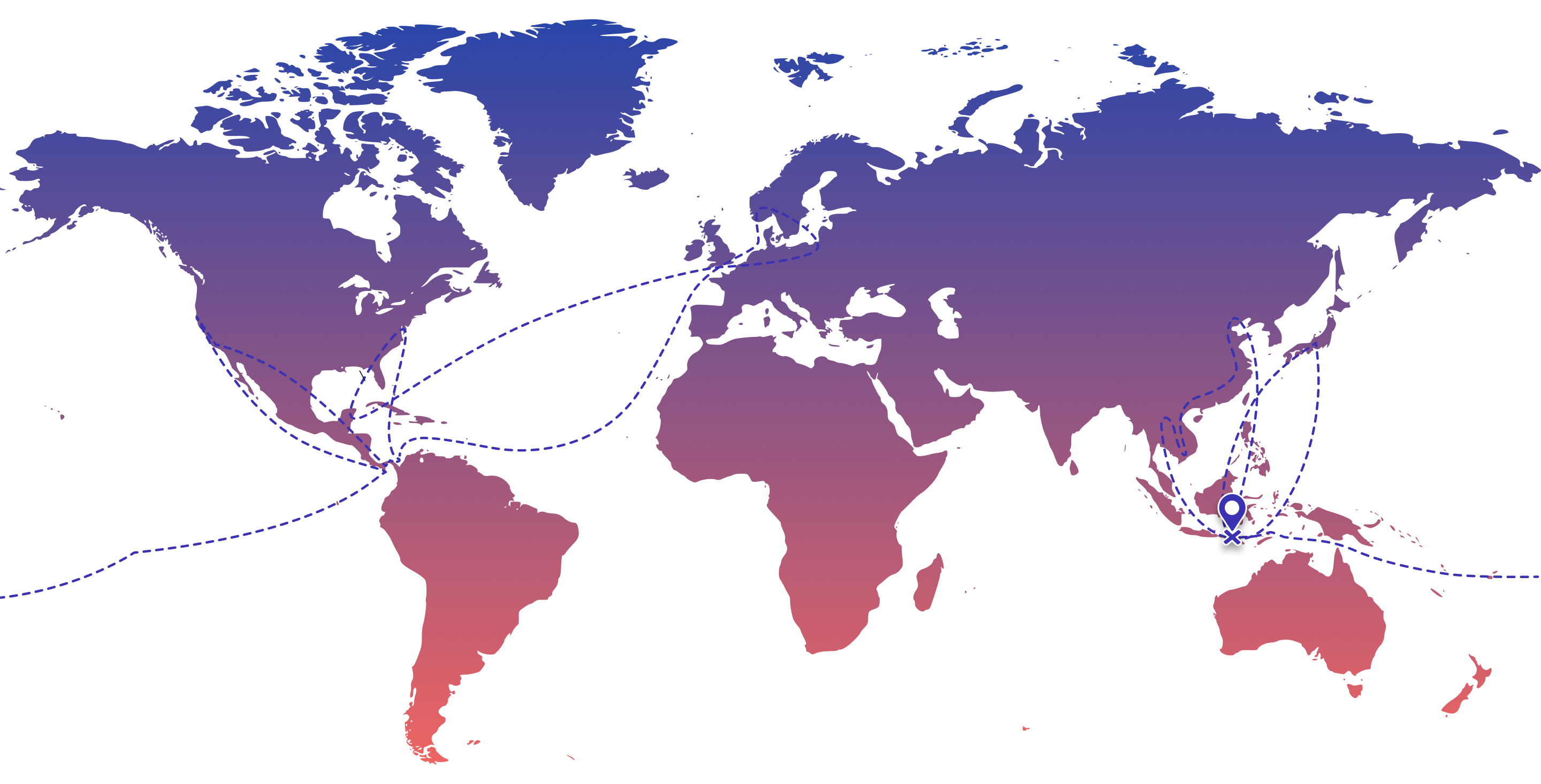
Back in Bali checking on the boat and visiting friends
People often assume a sailboat needs to be complete before heading offshore. Every system upgraded, every imperfection resolved, every improvement finished.
In practice, it rarely works that way. Our boat is almost never “done.” What matters is not whether everything is optimised, but whether it is seaworthy.
That distinction reshaped how I think about managing complex brand portfolios. The goal is not to perfect every visible layer, but to ensure the brand can hold under pressure.
Let’s jump into it
On a boat, the hierarchy is clear. The first priority is seaworthiness: does it float, can it steer, are essential systems working. Optimisation and comfort only matter once those conditions are secure.

Taking care of the engine is essential for steerage
Brands follow a similar hierarchy, though we often reverse it.
The more visible layers draw attention because they signal progress. But when viability, alignment or execution infrastructure are unstable, refinement amplifies fragility rather than strength.
I have seen this most clearly when establishing brands in new markets. It is tempting to benchmark against established players and invest in the polishing layer.
In practice, the real work sits lower: clarifying direction, aligning leadership, defining architecture and building governance that allows teams to move without renegotiating fundamentals.
Seaworthiness must precede sophistication.
A helpful resource
The Seaworthy Brand Framework is a prioritisation filter for complex portfolios. It asks leaders to separate structural stability from surface-level refinement and to allocate attention in the right order.
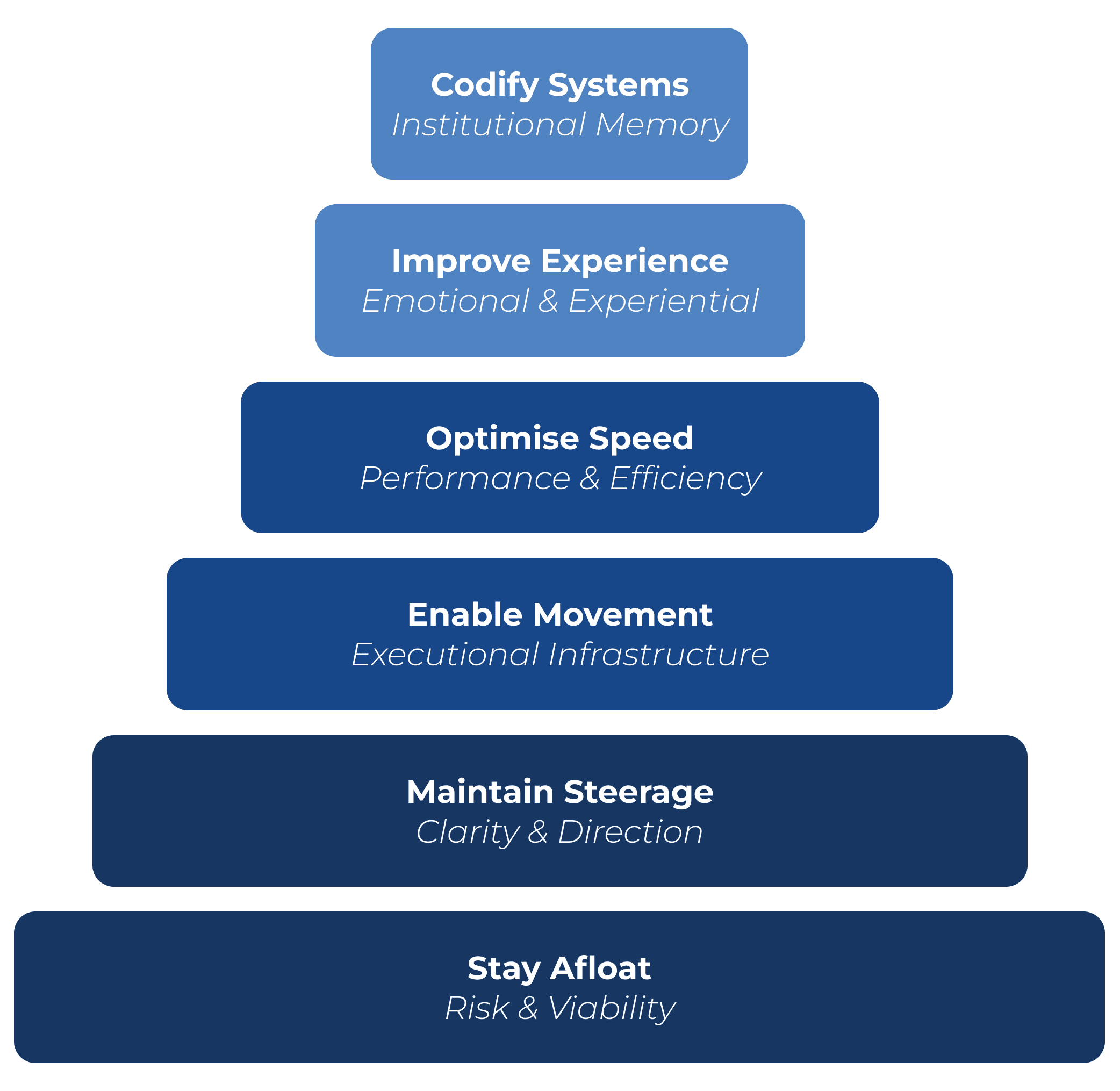
Seaworthy Brand Framework
Many organisations invest from the top down. They elevate experience while alignment is unclear, optimise performance while governance is inconsistent and interpret activity as progress.
The result is movement without structural strength. Discipline is about sequencing. When the underlying system is stable, optimisation compounds. When it is not, refinement disguises risk.
Five questions to get started:
- What is the single biggest threat to your brand’s business viability?
- Is your leadership team aligned on a clear strategic direction?
- Does your executional infrastructure allow teams to move without friction?
- Is your performance marketing actually masking structural instability?
- Are you prioritising surface-level refinement over core operational stability?
The leaders who build durable brands are those who understand which layers must hold before others can scale, and who are willing to stabilise the fundamentals before pursuing visible improvement.
Strong brands are built on seaworthiness first
And there’s more
✏️ Join: Fractionals United is a community dedicated to fractional roles (part-time executive leaders) and their challenges.
📚 Read: Comparative Grammar of Spanish, Portuguese, Italian and French helps build upon the languages you already know.
🎧 Listen: How to Engineer the Perfect Product Market Fit is an informative interview with the founder of Allbirds and Biologica.
📍 Visit: Hue is the formal imperial capital of Vietnam and offers a lot of beautiful architectural sights.